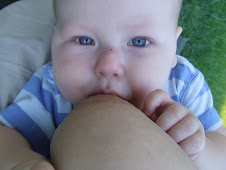
Just had to share this well written, well cited article. I do not hate women for getting epidurals, I hate the cultural fears and over-management of childbirth by Obs and CNMs that has caused them to think they NEED it and led them to LIE on it's safety. Please, take control of your labor and delivery. *Know* the risks of epidurals and other interventions, learn when they ARE necessary and how to avoid them. Look for alternatives to managing pain and labor because they DO exist, they ARE effective and they leave you feeling more positive and accomplished about your birth. It's not a slight against you, it's not an insult to women who've gotten epidurals (I'm ONE of those women!) it's about doing BETTER and becoming more INFORMED for yourself and your baby.
Epidural Epidemic - Drugs in Labor: Are They Really Necessary. . . or Even Safe?
By Joanne Dozer and Shannon Baruth
Issue 95, July/August 1999
The use of epidurals is so common today that many perinatal professionals are calling the 1990s the age of the epidural epidemic. Believed by many in the medical profession to be safe and effective, the epidural seems now to be regarded as a veritable panacea for dealing with the pain of childbirth.
It is true that most women experience pain during the course of labor. This pain can be intense and very real, even for those who have prepared for it. But pain is only one of many possible sensations and experiences that characterize the experience of giving birth. Barbara Katz Rothman, a sociologist who studies birth in America, writes that in the medical management of childbirth, the experience of the mother is viewed by physicians as pain: pain experienced and pain to be avoided.1 Having experienced childbirth ourselves, we have great compassion for women in painful labors. However, we also feel a responsibility to mothers and their babies to explore issues concerning the use of epidural anesthesia in labor issues that are seldom discussed prenatally.
Several factors make the use of epidurals potentially hazardous. The Physician’s Desk Reference cautions that local anesthetics - the type used in epidurals - rapidly cross the placenta. When used for epidural blocks, anesthesia can cause varying degrees of maternal, fetal, and neonatal toxicity which can result in the following side effects: hypotension, urinary retention, fecal and urinary incontinence, paralysis of lower extremities, loss of feeling in the limbs, headache, backache, septic meningitis, slowing of labor, increased need for forceps and vacuum deliveries, cranial nerve palsies, allergic reactions, respiratory depression, nausea, vomiting, and seizures.2 In addition, a piece of the catheter that delivers the drug into the duraregion of the back may break off and be left in the woman, a dangerous risk that necessitates surgical removal. One of the most well-known side effects of spinal anesthesia is a spinal headache. Depending on the amount of anesthetic used and how the catheter was placed, the headache can be mild or severe, lasting between one and ten days after the birth. This is not how any of us wants to feel in our first days and hours with our newborn.
Epidurals also have been linked to an overall increase in operative deliveries: cesareans, forceps deliveries, and vacuum extractions. A meta-analysis of the effects of epidural anesthesia on the rate of cesarean deliveries was undertaken by a group of physicians who examined, categorized, and analyzed all available literature. Eight primary studies revealed that the rate of cesarean section was 10 percentage points higher in the women who had received epidural anesthesia. One study actually found that the cesarean rate increased to 50 percent when the epidural was given at 2 cm dilation, 33 percent at 3 cm, and 26 percent at 4 cm.3 What caused this increase? In the first stage of labor, the muscles of the pelvic floor may become slack from the numbing effects of the epidural, causing the baby to change an otherwise ideal position or fail to descend into the pelvic cavity. In the second stage of labor, the anesthetized woman often is unable to push effectively since she cannot feel her muscles. When the baby does not descend properly or is malpositioned, progress can slow or stop, resulting in a longer labor and the increased possibility of a cesarean section, vacuum extraction, or forceps delivery.
In addition, epidurals usually slow contractions, which prompts medical personnel to administer intravenous Pitocin in order to strengthen them and increase their frequency. Even with Pitocin, which carries its own set of risks, an anesthetized labor may remain prolonged, risking a difficult labor with lack of progress. Prolonged labors put both mother and baby at greater risk of infection, necessitating the use of antibiotics. The longer a labor and slower the progress, the more likely it will end in a forceps, vacuum, or cesarean delivery. Since cesarean section is a major surgery, it strongly influences a woman’s recovery and the initiation of breastfeeding. Of course, the rate of postpartum infection is much higher with cesarean births. All vacuum extraction and forceps deliveries increase the risk of morbidity and birth injuries.
Another effect of epidurals during labor is the creation of hypotension in the mother, which can lead to bradycardia (a decrease in the heart rate) in the fetus. All types of anesthesia, including epidurals, can negatively affect the baby’s heart rate, possibly leading to fetal distress and necessitating an operative delivery. The newborn can continue to have breathing difficulties after birth, requiring supplemental oxygen or even resuscitation. While these problems may be resolved immediately following the birth, they often require the mother to be separated from her baby for neonatal nursery observation. This separation delays bonding and initial feeding. In addition, poor muscle tone and increased acidity in the baby’s blood due to bradycardia and oxygen deprivation may affect her ability to suck effectively, hampering initial attempts at early breastfeeding.
A mother’s temperature may become elevated with the use of epidural anesthesia, resulting in the infant being taken to the nursery and given a full work-up for possible infection. This may include extensive blood work and a spinal tap.4, 5
Furthermore, though epidurals usually remove all sensation in the lower body, "windows" can occur which leave the woman experiencing the intensity of her labor (perhaps on one side of her body) but with extremely limited mobility - obviously hindering her ability to cope with her contractions.6 The idea that pain medication can play a role in "natural childbirth" is deceptive, despite the assurance of the authors of What to Expect When You’re Expecting that "...wanting relief from excruciating pain is natural...therefore pain relief medication can play a role in natural childbirth."7 This is rather twisted logic, since the concept of natural childbirth depends on the mother experiencing both mental and physical sensations of labor. The epidural may allow a woman to be awake and aware of what is happening, but she will not be experiencing a natural labor as she will be numb to any physical sensations below the waist. A split between the mind and the body is effectively created with this anesthetic, disengaging her mind from her physical feelings. Could such disconnection be natural childbirth? Robbie Davis-Floyd, an anthropologist who studies birth in America, argues that the woman in labor with an epidural "...is separated as a person as effectively as she can be from the part of her that is giving birth."8 There is an eerie quality to this kind of birth; the mother is robbed of her own connection to her power and life-creative force. She loses the opportunity to experience the inherent wisdom of the body and its ability to birth without interference. Indeed, most women who have felt childbirth agree that it was a deep, enriching, and positive experience.
What alternatives do women have for the relief of pain in labor? Unfortunately, many women enter the birth experience with a strong belief that birth is something horrible and nightmarish. They are already filled with fear, not only for their own and their baby’s safety but also about what they have heard is the unbearable pain of childbirth. Another important fear is that of "losing control" during labor and delivery. A mother often is labeled out of control if she expresses the natural, primal sounds of labor. Technologically oriented medical practitioners who are sure that childbirth is something to be wrestled into submission feel that the sound of a mother wailing in pain is a sign that she is "losing it" and ought to be medicated. In hospitals, mothers are often told by well-meaning nurses to be quiet so as not to disturb the other "patients." But release of sound is a natural way to express and release painful - and intense - sensations. Suppressing a mother’s natural instincts to move around freely and make noise in labor will increase her actual pain. The prepared childbirth movement - in particular the Lamaze technique - has been successful for some women by helping them remain "in control" by training for structured labor breathing. However, some women actually do connect to their body rhythms and natural breathing patterns in labor, and if they are more loyal to themselves than to their training, they may be seen as wild, out-of-control "Lamaze failures." This failure is defined as their inability in labor to be mannerly and controlled. In fact, one of the primary psychological reasons for lack of progress and cesareans is a fearful mother’s unconscious attempts to control the intensity of her labor. Her lack of progress is due to her inability to let go and surrender. Mothers are told they must be in control when actually they need to let go.
So how does a mother let go and find her way through the pain of labor? First, she needs to give birth where she feels safe. For some women this may mean a medicalized hospital birth; others may feel safest at home or in an alternative birthing center. Most women find that they feel safest in the loving hands of a practitioner with whom they have developed a supportive and loving relationship. This person may be a special kind of doctor or it may be a midwife. Midwives specialize in personalized, supportive perinatal care. Support is the best form and prime source of non-pharmacological pain relief. Support can also come from the love and care of a partner. If you are having your baby in a hospital, it may be worthwhile to secure the help of a knowledgeable friend or a doula. Support can be active: massage, breathing together, encouraging words and attentiveness, and reassurance that what it happening is normal and that you are handling it well. Other support can be more passive: a midwife’s calm demeanor, a gentle nurse’s presence, the peaceful attentions of loved ones. A laboring mother needs to feel safe, loved, and accepted. And when she is, whether she screams, hollers, whines, moans, bargains, begs, or just plain doesn’t act "civilized," giving birth vaginally without medication is a triumph in itself.
One of the ways to endure labor is to recognize (ideally, during one’s prenatal education) the connection between fear, tension, and pain - the "fear-tension-pain syndrome." Basically, when a mother feels fear, she will be tense and experience more pain. Relaxation relieves the tension that helps create the sensation of intense pain. The notion of a relaxing labor might seem crazy, but it is possible, and we have seen it many times. Of course, a mother will feel more relaxed and safer in the birth environment of her choice and with her chosen caregivers. Perhaps the more the mother chooses about her birth environment, the more fully she can relax.
Childbirth education classes that focus on birth as natural and normal encourage women to trust the birthing process. Birthing is full of new sensations which can be frightening and difficult to integrate; some women tell us that they felt they might split in two! Understanding the reasons behind the sensations can make them more manageable, since we fear most that which we do not understand. Another key concept in prenatal education is truly believing we can birth our babies, just as women have done for ages. The world was well-populated long before modern obstetrics, and today the lowest maternal and infant mortality and morbidity rates are in the countries where natural, midwife-assisted births are the norm.
Not only can we birth our babies naturally, we can birth in our own style. Birth doesn’t need to be performed in any specific way. It is a woman’s right to create her labor her way, and she needs to be accepted for her way of doing it. She may find help in deep breathing, light breathing, dancing, singing, yelling, screaming, moaning, crying, walking, or bathing. She needs support for whatever works to assist her to birth her baby. Soaking in water can also help tremendously in reducing pain in labor. Prenatal yoga can be extremely helpful since it teaches women to relax by using deep breathing techniques and imagery. Both of these methods help her to connect more profoundly to her body and baby.
No woman should feel like a failure for having used pain relief medication during labor. There is a time and place for it in specific circumstances, and epidurals may be very effective. However, the decision to use an epidural should be an educated one, made only after all other options have been exhausted. Birthing is hard work. It is sweaty, noisy, and emotional, and it always requires our full attention. If we accept this, and stop trying to make birthing "civilized," we can help mothers to endure and cope.
Assisting a woman who is giving birth also is hard work, requiring education, love, and our full attention. Supporting birthing women in this way results in less fear, less pain, and a decrease in the need and desire for epidural anesthesia. The satisfaction of a natural birth - including the sheer endurance of pain and sometimes overwhelming sensations - is accompanied by great joy, even ecstasy. The realization of all these complex emotions is experienced not only by the mother but also by her partner and those who assist, attend, and support her in labor. The sense of joy and accomplishment from a natural birth is the right of every woman - and a wonderful gift to any newborn in those very special, first moments of life. NOTES
1. Barbara Katz Rothman, In Labor: Women and Power in the Birthplace, (New York: W.W. Norton & Company, 1991), 80
2. Sifton, David W. Ed., The Physician’s Desk Reference (Montvale, NJ: Medical Economics Company, 1996), 2318.
3. Joseph Gambone, D.O., and Katherine Kahn, M.D., "The Effect of Epidural Analgesia for Labor on the Cesarean Delivery Rate," Obstetrics and Gynecology 83, No. 6 (June 1994):1045-1052; Thorp, M.D., et. al., "Epidural Anesthesia and Cesarean Section for Dystocia: Risk Factors in Multiparas," American Journal of Perinatology 8, No. 6: 402-410; Thorp, M.D., et. al., "The Effect of Intrapartum Epidural Analgesia on Nulliparous Labor: A Randomized, Controlled, Prospective Trial," American Journal of Obstetrics and Gynecology 169, No. 4: 851-858.
4. Author’s name, "The Bad News About Epidurals," Time, March 24, 1997, page 40.
5. Fusi, et al., "Maternal Pyrexia Associated with the Use of Epidural Analgesia in Labour," Lancet 8649 (3 June 1989): 1250.
6. B.M. Morgan, S. Rehor, and P.J. Lewis, "Epidural Anesthesia for Uneventful Labor," Anesthesia 35 (1980): 57-60.
7. Arlene Eisenberg, Heidi Murkhoff, and Sandee Hathaway, What to Expect When You’re Expecting (New York: Workman Publishing, 1984), 227.
8 Robbie E. Davis-Floyd, Birth as an American Rite of Passage (Los Angeles: University of California Press, 1992), 115. OTHER REFERENCES
Griffin, Nancy. "The Epidural Express: Real Reasons Not to Jump On Board," Mothering , Spring, 1997.
Mitford, Jessica. The American Way of Birth. Dutton, New York, 1992.
Morton, Sally, Ph.D.; Williams, Mark, M.D.; Keller, Emmett, PhD.; Peaceman, M.D., et. al., "Factors that influence route of delivery - active vs. traditional labor management," American Journal of Obstetrics and Gynecology, Vol. 169, No. 4, 940-944.
Sepkowski, Lester, Ostheimer and Brazelton. "The effects of maternal epidural anesthesia on neonatal behavior during the first month," Development of Medicine and Child Neurology, 1992, 34, 1072-1080. This article was originally edited by Leslie Hauslein. Shannon Baruth is a birth assistant, apprenticing midwife, mother to Cassidy Rose (2 1/2) and Sage (14 months), and partner to Michael. She graduated from Bryn Mawr College in 1997 with a bachelor’s degree in anthropology. She resides in rural Wisconsin. Joann Dozer is a registered nurse and CPM who has been delivering babies at home for more than 20 years. A trained Gestalt therapist, she provides counseling and workshops for women and couples. Joanne is the mother of Scott, born in 1968 in a hospital delivery that included the use of Demerol and spinal anesthesia; Lianna, born in 1973 in the birthing room of an Amish midwife’s home; and Emily, born in 1976 at home with a midwife and doctor.
Showing posts with label doctors. Show all posts
Showing posts with label doctors. Show all posts
5.09.2010


2.11.2010
What's in Breastmilk?
What's in Breast Milk?

The American Academy of Pediatrics (AAP) strongly recommends exclusive breastfeeding for the first six months of life. It is optimal for both babies and mothers. For babies it can protect against infections and reduce the rates of later health problems including diabetes, obesity, and asthma.
For mothers breastfeeding helps the uterus to contract and bleeding to cease more quickly after delivery. Breastfeeding can reduce the risk of breast and ovarian cancer and also provides a great way for mothers to bond with their babies.
Find a Lactation Conultant in Your Area
The advantages of breastfeeding are numerous. Breast milk is ultimately the best source of nutrition for a new baby. Many components in breast milk help protect your baby against infection and disease. The proteins in breast milk are more easily digested than in formula or cow’s milk. The calcium and iron in breast milk are also more easily absorbed.
The following is a brief overview of the components of breast milk and the nutrients they provide for your baby.
Proteins
Human milk contains two types of proteins: whey and casein. Approximately 60% is whey, while 40% is casein. This balance of the proteins allows for quick and easy digestion. If artificial milk, also called formula, has a greater percentage of casein, it will be more difficult for the baby to digest. Approximately 60-80% of all protein in human milk is whey protein. These proteins have great infection-protection properties.
Listed below are specific proteins that are found in breast milk and their benefits:
- Lactoferrin inhibits the growth of iron-dependent bacteria in the gastrointestinal tract. This inhibits certain organisms, such as coliforms and yeast, that require iron.
- Secretory IgA also works to protect the infant from viruses and bacteria, specifically those that the baby, mom, and family are exposed to. It also helps to protect against E. Coli and possibly allergies. Other immunoglobulins, including IgG and IgM, in breast milk also help protect against bacterial and viral infections. Eating fish can help increase the amount of these proteins in your breast milk.
- Lysozyme is an enzyme that protects the infant against E. Coli and Salmonella. It also promotes the growth of healthy intestinal flora and has anti-inflammatory functions.
- Bifidus factor supports the growth of lactobacillus. Lactobacillus is a beneficial bacteria that protects the baby against harmful bacteria by creating an acidic environment where it cannot survive
Fats
Human milk also contains fats that are essential for the health of your baby. It is necessary for brain development, absorption of fat-soluble vitamins, and is a primary calorie source. Long chain fatty acids are needed for brain, retina, and nervous system development. They are deposited in the brain during the last trimester of pregnancy and are also found in breast milk.
Vitamins
The amount and types of vitamins in breast milk is directly related to the mother’s vitamin intake. This is why it is essential that she gets adequate nutrition, including vitamins. Fat-soluble vitamins, including vitamins A, D, E, and K, are all vital to the infant’s health. Water-soluble vitamins such as vitamin C, riboflavin, niacin, and panthothenic acid are also essential. Because of the need for these vitamins, many healthcare providers and lactation consultants will have nursing mothers continue on prenatal vitamins.
Carbohydrates
Lactose is the primary carbohydrate found in human milk. It accounts for approximately 40% of the total calories provided by breast milk. Lactose helps to decrease the amount of unhealthy bacteria in the stomach, which improves the absorption of calcium, phosphorus, and magnesium. It helps to fight disease and promotes the growth of healthy bacteria in the stomach.
Breast Milk is Best
Breast milk has the perfect combination of proteins, fats, vitamins, and carbohydrates. There is nothing better for the health of your baby. Leukocytes are living cells that are only found in breast milk. They help fight infection. It is the antibodies, living cells, enzymes, and hormones that make breast milk ideal. These cannot be added to formula.
Though some women ultimately are not able to breastfeed, many who think they cannot actually are able to breastfeed. Lactation consultants are able to provide support to women learning to breastfeed. For those who are not able to breastfeed, milk banks can be an alternative.
Last Updated: 08/2006
Compiled using information from the following sources:
Breastfeeding the Newborn: Clinical Strategies for Nurses. Biancuzzo, Marie, 1999.
Bestfeeding: How to Breastfeed Your Baby. Renfrew, Mary et al, 2004.
2.02.2010
Circumcision: The Uncut Version
I love this blogger. This particular article was so appreciated, though. It's just too bad that circumcision is still America's dirty little secret.
Sadly, many new parents do not even research circumcision. This is just as disappointing to me as when they choose to keep their sons intact, but do no research and therefore don't care properly for them. When we just blindly make decisions, especially those about our children's health (Vaccinations, elective surgeries, feeding, etc) we aren't just hurting ourselves, or our kids...but the population as a whole.
If you circumcise your son because it's "Just what everyone does" what other things are you going to alter in the name of popularity? Will you get your daughter a boob job in high school if "everyone else is doing it" according to rumor? Because that's all that myth is, a rumor. Roughly, only half of US boys are being circumcised today. In some areas, like the West Coast, that number is as low as 30%. But, I won't make an argument for something as important as circumcision based off of location. After all, perhaps you're on the East coast which boasts a disgustingly high circ rate of 90% in some areas. And after all, you may move someday.
I'd much rather convince you of the ill effects of infant circumcision with FACTS. To do so, I'm going to list common pros that are given in favor of circumcising young infant boys. Then, I'm going to explain why they're bull shit.
"My husband is circumcised, I don't want him to wonder why he doesn't look like daddy"
-This is a very common reason for wanting to circumcise an infant. But, let's just think about this for a second. What other body parts of your husband's need to match? If your son's ears are different, are you going to alter them? No. And hey, your son won't have the same genitalia as you, but you'll explain that to him, that boys and girls look different. So why not explain to him that his daddy had a surgery as a baby to remove his skin, but you didn't do that to him because *insert whatever reason here, like "You were born perfect".* I can tell you that your son, if he has any questions at all about dad's privates, will probably be more interested in why he has pubic hair and why daddy's penis is bigger than his. You don't go around performing elective surgeries on people so they match. We're all different and unique...this should involve a life lesson, not scalpels.
"All his peers will be circumcised and I don't want him teased in the locker room."
-If a child is going to be teased about something, there's little you can do to prevent it. He could be teased for having a small penis...you're not going to get it enlarged. Plus, this excuse works on the assumption that guys are going to be checking each other out in the locker room. In the rare event that someone were to poke fun at your kid for having a foreskin, there are many retorts your son could shoot back, like "Why are you checking out my junk, jealous?" or "At least I'm not lacking in that department and have my whole penis." There's no reason to alter your perfect infant because someday, someone in some random situation may tease him. Plus, I remind you that the circ rates are dropping, drastically. The boys of today are being left intact, much like the rest of the world (85% of the men in our world have their foreskins).
"Well, those two reasons aside, it's better for his health. It's cleaner, it's easier to clean and he won't spread STDs as easily."
-No, no, and, no. To understand this you have to first understand how the foreskin functions. In infant boys, the foreskin is fused to the glans (head of the penis) much like your finger nail is attached to your finger. When your baby pees, it flushes out the inner part of the foreskin (and remember that urine is sterile) so this works to keep your son clean. Also, by keeping his foreskin, you prevent feces from his diaper from touching his urethra or getting under his foreskin, and therefore, prevent the chance of him getting foreign bacteria in his urinary tract. Older studies suggested that circumcised boys were less likely to get UTIs. There are more studies that show no difference and others that show that intact boys get them less often. Regardless of what the truth is, girls are more prone to UTIs than either circumcised OR intact boys, and we treat them with proper hygiene and antibiotics, no surgery.
Now to clean, let's imagine this: An intact boy requires NO special care. Because the foreskin is fused to the glans, you do NOT retract it, ever. This could cause pain, tears, and adhesions. Instead, you wipe only what you see, like you wash your finger. If you circumcise your infant, you'll have much more to do. During the healing process, you'll be taking care of a wound, in a diaper. Afterward, you'll have to clean any skin that was still left very thoroughly so that he doesn't get an infection. You may also have to worry about the freshly cut skin trying to heal back to the glans, usually resulting in adhesions. Advice on this varies from "do not retract" (like in intact boys) to "you must retract to prevent the adhesions or break them" so there's really no TRUE information on what to do. When the intact boy retracts naturally (sometime between infancy and puberty, but most commonly toddlerhood) he can retract, rinse and replace at bathtime. No soaps, just water. No harder than if he lacked foreskin.
As far as STDs are concerned, no study really has the truth established. Those that say intact men are at greater risk, or rather carriers, of more infections (like HPV) are grossly incorrect and make little sense. The most commonly quoted study is about a group in Africa, where they taught the freshly circumcised men safe sex practices and provided them with condoms, but not the group they left intact. They also didn't factor that the freshly circumcised men weren't having sex while their penises healed. They found that the intact men contracted HIV more often than their cut counterparts, based on their poor approach of collecting this data. This study was, on top of it all, cut short (no pun intended). We can also look at the population of America and conclude this study makes no sense. Our own HIV/AIDS rate is quite high to that of other industrialized counter parts, yet, we have an astoundingly high circumcision rate (about 90% of grown men in the US are circumcised, as this was the rate about 20-some years ago). So, how is it that we have such a high rate of HIV/AIDS when we also have such a high rate of circumcision? That makes no sense...
On top of that, to argue in favor of surgery on infants, to possibly reduce the risk of STD transfer in adults is irresponsible. Instead, we need to teach our children how their bodies function, how STDs are transferred and contracted, and push safe sex. THIS is what will protect your son or daughter, not a false sense of protection because they were circumcised (or their partner is).
"But uncircumcised penises are soooo gross!"
-Really? How attractive is YOUR genitalia? If a man you were really in to took you home, and you started to fool around, and he caught a glimpse of your goods and never called you again because it was "so gross" he'd be labeled an asshole. Most genitals are not very attractive, female or male; circumcised or not. We are all made differently and none of us "match". To discount a person because they have foreskin is incredibly shallow. Just like a man discounting a woman for having an extended clitoris, longer labia, or not having her clitoral hood removed is shallow.
There is nothing gross about the state of a man's (or infant's) natural penis. This is how they are SUPPOSE to look; without tight skin or dark circle scars. We tend to be afraid of what we don't know, but that doesn't make it's ok. It's just ignorance to how a penis is suppose to look. If your son's toes were oddly shaped and ugly, you wouldn't remove them. They are part of him, and you love every bit.
"Well, I've never actually seen one. I didn't mean it was gross looking because of the skin, I meant because of all that nasty stuff that builds up in there!"
-If you've never seen one, how do you know it's nasty? Oh, because of rumors and stigmas surrounding intact men in America. Well, we're talking about infants, for one. Remember how I said the glans and foreskin were fused? Yea, there's nothing "building up". And, the "stuff" is called smegma. This is a natural lubricant produced by the body, you have it too. It's your discharge. It keeps your pH balance normal, it keeps you lubricated for sex, it keeps your skin there soft. Everyone needs to practice proper hygiene, circumcised men included. In the end, a dirty penis is a dirty penis. Most intact men take extra care to keep themselves clean, partly because there is such a stigma about having a foreskin. In order for smegma to build up, the man needs to really lack in caring for his man bits, and this would probably be no different if her were circumcised, and I doubt you'd put EITHER penises in your mouth. But again, we're talking about infants, and whether you need to worry about his for YOUR son...so again, the answer is no. For the first portion of his life, his foreskin is self cleaning, after that, you teach him how. After that, it's up to him whether he'll be a slob or a Mr. Clean kinda guy. Regardless, it's nothing to remove body parts over.
"If it was unnecessary, they wouldn't do it."
-Many insurance companies, and state medicaid, are no longer covering circumcisions. Certain hospitals have banned the procedure as well. I've heard, first hand from friends/aquaintances, quotes in the range of $350-$1500 to have the surgery performed on their newborn. The reasons given "It is not medically necessary, it is a preference." My co-worker and I were discussing this issue one day. She was telling me that she had taken him (her son) to the pediatrician to get it done, because the hospital didn't perform the. The pediatrician told her the procedure was not covered by her insurance because it was considered a cosmetic surgery, and it would cost them $400. She debated it, but he told her that there was absolutely no reason to do it, that many boys today aren't getting circumcised, and told her proper care (not to retract). He's 5 and while her intentions walking in to the pediatricians office that day were to circumcise him without a thought or any research, she told me how happy she is that it wasn't covered and that he remained intact. I'm pretty sure he'll be happy about that, too!
If there are any other reasons you've heard for someone wanting to circumcise, I'd love to hear them. If you've been considering it and are still confused, have more questions, etc I would love to address that.
There are so many decisions for new parents to make, and it's important that you're informed. What I found when researching circumcision was that EVERY pro-circ benefit could be debunked with medical facts. That was enough for me. Why expose my perfect newborn boy to the risks of bleeding, pain, MRSA staph infection, decreased sensitivity and genital integrity if there were no benefits to it?
For a great first time parent article, check this out: http://www.circumstitions.com/Itsaboy.html
Here's a group of doctors opposing circumcision: http://www.doctorsopposingcircumcision.org/
For a quick, easy fact-checking decision maker, look at this: http://circumcisiondecisionmaker.com/
To find out why this group is fighting for baby boy's rights, go here: http://www.intactamerica.org/
Already raising an intact son (or pregnant with one who'll stay that way) join us here:
*Raising Intact Boys* on cafemom.
Sadly, many new parents do not even research circumcision. This is just as disappointing to me as when they choose to keep their sons intact, but do no research and therefore don't care properly for them. When we just blindly make decisions, especially those about our children's health (Vaccinations, elective surgeries, feeding, etc) we aren't just hurting ourselves, or our kids...but the population as a whole.
If you circumcise your son because it's "Just what everyone does" what other things are you going to alter in the name of popularity? Will you get your daughter a boob job in high school if "everyone else is doing it" according to rumor? Because that's all that myth is, a rumor. Roughly, only half of US boys are being circumcised today. In some areas, like the West Coast, that number is as low as 30%. But, I won't make an argument for something as important as circumcision based off of location. After all, perhaps you're on the East coast which boasts a disgustingly high circ rate of 90% in some areas. And after all, you may move someday.
I'd much rather convince you of the ill effects of infant circumcision with FACTS. To do so, I'm going to list common pros that are given in favor of circumcising young infant boys. Then, I'm going to explain why they're bull shit.
"My husband is circumcised, I don't want him to wonder why he doesn't look like daddy"
-This is a very common reason for wanting to circumcise an infant. But, let's just think about this for a second. What other body parts of your husband's need to match? If your son's ears are different, are you going to alter them? No. And hey, your son won't have the same genitalia as you, but you'll explain that to him, that boys and girls look different. So why not explain to him that his daddy had a surgery as a baby to remove his skin, but you didn't do that to him because *insert whatever reason here, like "You were born perfect".* I can tell you that your son, if he has any questions at all about dad's privates, will probably be more interested in why he has pubic hair and why daddy's penis is bigger than his. You don't go around performing elective surgeries on people so they match. We're all different and unique...this should involve a life lesson, not scalpels.
"All his peers will be circumcised and I don't want him teased in the locker room."
-If a child is going to be teased about something, there's little you can do to prevent it. He could be teased for having a small penis...you're not going to get it enlarged. Plus, this excuse works on the assumption that guys are going to be checking each other out in the locker room. In the rare event that someone were to poke fun at your kid for having a foreskin, there are many retorts your son could shoot back, like "Why are you checking out my junk, jealous?" or "At least I'm not lacking in that department and have my whole penis." There's no reason to alter your perfect infant because someday, someone in some random situation may tease him. Plus, I remind you that the circ rates are dropping, drastically. The boys of today are being left intact, much like the rest of the world (85% of the men in our world have their foreskins).
"Well, those two reasons aside, it's better for his health. It's cleaner, it's easier to clean and he won't spread STDs as easily."
-No, no, and, no. To understand this you have to first understand how the foreskin functions. In infant boys, the foreskin is fused to the glans (head of the penis) much like your finger nail is attached to your finger. When your baby pees, it flushes out the inner part of the foreskin (and remember that urine is sterile) so this works to keep your son clean. Also, by keeping his foreskin, you prevent feces from his diaper from touching his urethra or getting under his foreskin, and therefore, prevent the chance of him getting foreign bacteria in his urinary tract. Older studies suggested that circumcised boys were less likely to get UTIs. There are more studies that show no difference and others that show that intact boys get them less often. Regardless of what the truth is, girls are more prone to UTIs than either circumcised OR intact boys, and we treat them with proper hygiene and antibiotics, no surgery.
Now to clean, let's imagine this: An intact boy requires NO special care. Because the foreskin is fused to the glans, you do NOT retract it, ever. This could cause pain, tears, and adhesions. Instead, you wipe only what you see, like you wash your finger. If you circumcise your infant, you'll have much more to do. During the healing process, you'll be taking care of a wound, in a diaper. Afterward, you'll have to clean any skin that was still left very thoroughly so that he doesn't get an infection. You may also have to worry about the freshly cut skin trying to heal back to the glans, usually resulting in adhesions. Advice on this varies from "do not retract" (like in intact boys) to "you must retract to prevent the adhesions or break them" so there's really no TRUE information on what to do. When the intact boy retracts naturally (sometime between infancy and puberty, but most commonly toddlerhood) he can retract, rinse and replace at bathtime. No soaps, just water. No harder than if he lacked foreskin.
As far as STDs are concerned, no study really has the truth established. Those that say intact men are at greater risk, or rather carriers, of more infections (like HPV) are grossly incorrect and make little sense. The most commonly quoted study is about a group in Africa, where they taught the freshly circumcised men safe sex practices and provided them with condoms, but not the group they left intact. They also didn't factor that the freshly circumcised men weren't having sex while their penises healed. They found that the intact men contracted HIV more often than their cut counterparts, based on their poor approach of collecting this data. This study was, on top of it all, cut short (no pun intended). We can also look at the population of America and conclude this study makes no sense. Our own HIV/AIDS rate is quite high to that of other industrialized counter parts, yet, we have an astoundingly high circumcision rate (about 90% of grown men in the US are circumcised, as this was the rate about 20-some years ago). So, how is it that we have such a high rate of HIV/AIDS when we also have such a high rate of circumcision? That makes no sense...
On top of that, to argue in favor of surgery on infants, to possibly reduce the risk of STD transfer in adults is irresponsible. Instead, we need to teach our children how their bodies function, how STDs are transferred and contracted, and push safe sex. THIS is what will protect your son or daughter, not a false sense of protection because they were circumcised (or their partner is).
"But uncircumcised penises are soooo gross!"
-Really? How attractive is YOUR genitalia? If a man you were really in to took you home, and you started to fool around, and he caught a glimpse of your goods and never called you again because it was "so gross" he'd be labeled an asshole. Most genitals are not very attractive, female or male; circumcised or not. We are all made differently and none of us "match". To discount a person because they have foreskin is incredibly shallow. Just like a man discounting a woman for having an extended clitoris, longer labia, or not having her clitoral hood removed is shallow.
There is nothing gross about the state of a man's (or infant's) natural penis. This is how they are SUPPOSE to look; without tight skin or dark circle scars. We tend to be afraid of what we don't know, but that doesn't make it's ok. It's just ignorance to how a penis is suppose to look. If your son's toes were oddly shaped and ugly, you wouldn't remove them. They are part of him, and you love every bit.
"Well, I've never actually seen one. I didn't mean it was gross looking because of the skin, I meant because of all that nasty stuff that builds up in there!"
-If you've never seen one, how do you know it's nasty? Oh, because of rumors and stigmas surrounding intact men in America. Well, we're talking about infants, for one. Remember how I said the glans and foreskin were fused? Yea, there's nothing "building up". And, the "stuff" is called smegma. This is a natural lubricant produced by the body, you have it too. It's your discharge. It keeps your pH balance normal, it keeps you lubricated for sex, it keeps your skin there soft. Everyone needs to practice proper hygiene, circumcised men included. In the end, a dirty penis is a dirty penis. Most intact men take extra care to keep themselves clean, partly because there is such a stigma about having a foreskin. In order for smegma to build up, the man needs to really lack in caring for his man bits, and this would probably be no different if her were circumcised, and I doubt you'd put EITHER penises in your mouth. But again, we're talking about infants, and whether you need to worry about his for YOUR son...so again, the answer is no. For the first portion of his life, his foreskin is self cleaning, after that, you teach him how. After that, it's up to him whether he'll be a slob or a Mr. Clean kinda guy. Regardless, it's nothing to remove body parts over.
"If it was unnecessary, they wouldn't do it."
-Many insurance companies, and state medicaid, are no longer covering circumcisions. Certain hospitals have banned the procedure as well. I've heard, first hand from friends/aquaintances, quotes in the range of $350-$1500 to have the surgery performed on their newborn. The reasons given "It is not medically necessary, it is a preference." My co-worker and I were discussing this issue one day. She was telling me that she had taken him (her son) to the pediatrician to get it done, because the hospital didn't perform the. The pediatrician told her the procedure was not covered by her insurance because it was considered a cosmetic surgery, and it would cost them $400. She debated it, but he told her that there was absolutely no reason to do it, that many boys today aren't getting circumcised, and told her proper care (not to retract). He's 5 and while her intentions walking in to the pediatricians office that day were to circumcise him without a thought or any research, she told me how happy she is that it wasn't covered and that he remained intact. I'm pretty sure he'll be happy about that, too!
If there are any other reasons you've heard for someone wanting to circumcise, I'd love to hear them. If you've been considering it and are still confused, have more questions, etc I would love to address that.
There are so many decisions for new parents to make, and it's important that you're informed. What I found when researching circumcision was that EVERY pro-circ benefit could be debunked with medical facts. That was enough for me. Why expose my perfect newborn boy to the risks of bleeding, pain, MRSA staph infection, decreased sensitivity and genital integrity if there were no benefits to it?
For a great first time parent article, check this out: http://www.circumstitions.com/Itsaboy.html
Here's a group of doctors opposing circumcision: http://www.doctorsopposingcircumcision.org/
For a quick, easy fact-checking decision maker, look at this: http://circumcisiondecisionmaker.com/
To find out why this group is fighting for baby boy's rights, go here: http://www.intactamerica.org/
Already raising an intact son (or pregnant with one who'll stay that way) join us here:
*Raising Intact Boys* on cafemom.
Subscribe to:
Posts (Atom)