3.01.2010

Who Profits??

**Cross Posted from my other blog**

I'm sharing this article on THIS blog not to argue in favor of homebirth or say that choosing hospital birth is wrong. Like *most* things I post, it's purpose is to educate, share and make you think. Leave your constructive comments below.

Who Profits?

Anyone can admit that we are easily influenced and swayed by what seems to be a popular opinion. Most people would agree that it is much easier to be a PART of the masses than to be APART from them.

"What is popular is not always right,
and what is right is not always popular."

When it comes to parenting (specifically birthing and infant care) we are led to believe that our instincts are no longer necessary and that technology knows better than nature. But who profits from this philosophy? Certainly not mother and baby. Instead, there is a very large LITERAL profit to be made off of influencing you in your choices.

There is money to be made off of where you birth, how you birth and also, how you feed and treat your infant. The hospital makes a very large portion of their profit from the labor and delivery ward and let's face it, hospitals are businesses. They do NOT want to lose that money, even if it might mean safer outcomes can occur at home for low risk women. Obstetricians make thousands of dollars off your birth (and prenatal care) whereas homebirth midwives make around $4000 (for both the birth and prenatal care total). A cesarean can cost you more than $20,000 and only costs your OB 30 minutes of work (and a nice early bed time if you aren't "progressing" fast enough). Vaccinations, routine exams and procedures (episiotomy, circumcision, forcep delivery) all take just a moment to do/perform and net a nice profit.

Now, before you stop reading and get angry and tell me I hate OBs and that I think hospitals are evil, let me say, no. OBs are SPECIALISTS. They are INCREDIBLY skilled in saving what needs to be saved BUT for that, I think *most* of them have a difficult time knowing and trusting that birth is normal. If your focus of study is all that can go wrong with something, it's hard NOT to want to act in a precautionary manner. For this, I believe that most OBs truly have women's best interest at heart with certain things. However, there are a few scenarios that are indisputably self centered and dangerous, serving the woman absolutely no benefit.

To continue, it is ignorant to think that every ad or persuasion doesn't have an underlying hidden meaning. Formula companies for example want to make money. They do not care about you and your baby, they care only for the profit. At the beginning, when infant formulas were first introduced, they provided a way for the women who could truly not breastfeed or have a wet nurse a way to provide for their infant children. Again, just like the hospitals, this can be and was life saving for those infants. However, there was profit to be made, a feminist movement of choice and a desire to no longer have to feel tied down to your children...and they marketed that. Today they advertise with such sayings as "Just as good as breastmilk" or "Has all your baby needs!" Stop. Think. Who profits from promoting breastfeeding? The mother and child who nurse. Who profits from promoting formula feeding? The industry.

Am I going to lose sleep over another parents' choices? Nope. But as a parent who did things this way and that way before stepping back and evaluating the choices, I wish only to share the other side of the glass with you. I would never tell a woman what choice she should make, I can only share what I know and what I continue to learn, because I care.

To say that homebirthers are selfish or that it's dangerous, because that is what those who profit from your hospital birth tell you, well...that makes you sound not only uneducated, but silly.

Remember who profits from routine interventions in normal birth: it's not you...and it's certainly not the baby.

2.24.2010

A Day (or 4) in the life...

As a hobby and part time side job, I have a small freelance photography business offering portraits to locals. I've always wanted to participate in a 365 project, where you take a photograph every day for a year. I started "late" rather than on the first day of 2010 and didn't set my goals high. I'm not tracking something or striving for artistry but simply making sure I use my camera EVERY day, regardless of what I end up shooting.

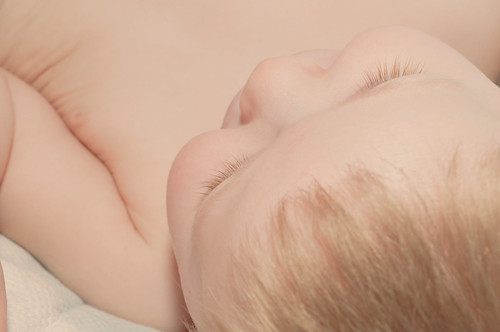
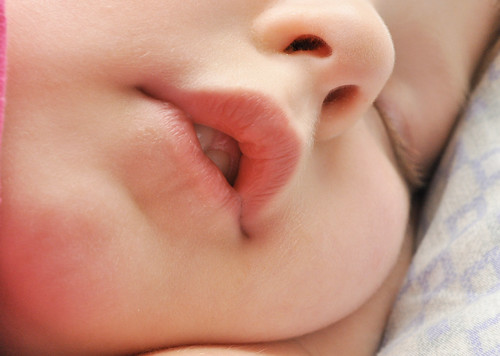
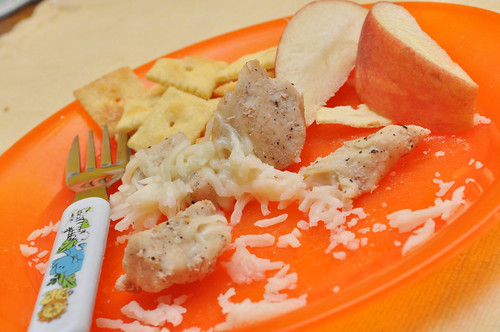
I have a feeling the constant will develop as a catalog of days spent with my babies. So far, on day 4, here are the results:

Feb 21

Feb 22

Feb 23

Feb 24

I'm glad I finally decided to take on the "challenge". Whether or not great art comes of it, or I simply capture the beauty in every day life I am excited to see where it all goes and to use my camera EVERY single day.

Have you ever done this yourself? (Share a link!)
Want to start one? (Go ahead!)

2.18.2010

The Co-sleeping Conspiracy

Head in Hands BWWhile pregnant with my first baby, I didn't think much of babies "needing" to sleep anywhere. Yes, we bought a crib and yes, the intention was to have her sleep in it, but I never thought of it as something she HAD to do. It was natural for us, from the very beginning, to snuggle in my bed. After she'd fallen asleep I'd sometimes lay her in her crib, only to bring her in bed with me at the first night time waking. This was just easier, for both of us. Less waking up for her and more z's for mom. Eventually, she naturally slept alone in her crib/bed without needing to come in to mine.

The same happened with baby number 2. I just gave birth to this precious little thing, that last thing on my mind was being separated from her! I wasn't breastfeeding, but that didn't matter. I was able to snuggle close to her, watch her breathing, comfort her while a bottle was made and keep her warm. Again, she naturally "weaned" from co-sleeping to sleeping in her crib. Both of the girls never had a problem napping in their cribs or even sleeping the first portion of the night there.

While pregnant with my son, my third baby, I began to see a lot of debate show up on co-sleeping. Either I never really paid attention to or noticed it before but apparently, it was a huge controversy. There are even campaigns that slander co-sleepers and parents are almost always blamed in co-sleeping deaths, while crib deaths are referred to as "SIDS". I was pretty shocked, to be honest. I had never researched co-sleeping (during my first two pregnancies I didn't research anything at all!) but I just knew there was nothing dangerous about it. I didn't consume alcohol and then sleep with my babies. I always was careful with pillows and blankets. The once heavy sleeper I was in my high school years disappeared as soon as I became a mom and I was aware of every move my babies made in bed. I didn't see the big deal.

For new parents, there can be a lot of information to take in. We constantly get well meaning, but sometimes awful, advice from family and friends. Many people gasp if you mention you sleep with your baby and they are quick to tell you about all the dangers.

But here's the thing: there are always SAFE and UNSAFE ways to do things, especially co-sleeping.

NEVER:
*Drink alcohol or use drugs and then co-sleep with your baby/child.
*Take medications that make you drowsy (this includes types of cough syrup, tylenol pms, sleeping aids, benadryl, etc)
*Use an excess of pillows and/or blankets.
*Pull the blankets up too far or over baby's head.
*Place your newborn between the wall and you.

ALWAYS:
*keep baby off pillows (mostly for newborns)
*Avoid overly stuffed blankets
*Be aware of where baby is at (when you stir or wake up, check on baby, just as you would in their crib).

For those of you about to become parents, do not worry about what people will think. It IS ok to take your baby to bed with you. Practice common sense safe sleeping, in cribs AND your own bed, and do not be ashamed to say you co-sleep with your little one. Motherhood is tiring and those first few weeks and months are not only an adjustment period but a learning experience. You may swear you'll never co-sleep only to find out it's the only way TO sleep. As with anything else, make sure you have ALL the info. Babies sometimes inexplicably pass away and yes, some babies are killed due to UNSAFE co-sleeping. If you do it, do it safely.

Happy sleeping!

2.11.2010

What's in Breastmilk?

What's in Breast Milk?

Breat Milk is made up of mnay essential nutrient componets

The American Academy of Pediatrics (AAP) strongly recommends exclusive breastfeeding for the first six months of life. It is optimal for both babies and mothers. For babies it can protect against infections and reduce the rates of later health problems including diabetes, obesity, and asthma.

For mothers breastfeeding helps the uterus to contract and bleeding to cease more quickly after delivery. Breastfeeding can reduce the risk of breast and ovarian cancer and also provides a great way for mothers to bond with their babies.

Find a Lactation Conultant in Your Area

The advantages of breastfeeding are numerous. Breast milk is ultimately the best source of nutrition for a new baby. Many components in breast milk help protect your baby against infection and disease. The proteins in breast milk are more easily digested than in formula or cow’s milk. The calcium and iron in breast milk are also more easily absorbed.

The following is a brief overview of the components of breast milk and the nutrients they provide for your baby.

Proteins

Human milk contains two types of proteins: whey and casein. Approximately 60% is whey, while 40% is casein. This balance of the proteins allows for quick and easy digestion. If artificial milk, also called formula, has a greater percentage of casein, it will be more difficult for the baby to digest. Approximately 60-80% of all protein in human milk is whey protein. These proteins have great infection-protection properties.


Listed below are specific proteins that are found in breast milk and their benefits:

  • Lactoferrin inhibits the growth of iron-dependent bacteria in the gastrointestinal tract. This inhibits certain organisms, such as coliforms and yeast, that require iron.
  • Secretory IgA also works to protect the infant from viruses and bacteria, specifically those that the baby, mom, and family are exposed to. It also helps to protect against E. Coli and possibly allergies. Other immunoglobulins, including IgG and IgM, in breast milk also help protect against bacterial and viral infections. Eating fish can help increase the amount of these proteins in your breast milk.
  • Lysozyme is an enzyme that protects the infant against E. Coli and Salmonella. It also promotes the growth of healthy intestinal flora and has anti-inflammatory functions.
  • Bifidus factor supports the growth of lactobacillus. Lactobacillus is a beneficial bacteria that protects the baby against harmful bacteria by creating an acidic environment where it cannot survive

Fats

Human milk also contains fats that are essential for the health of your baby. It is necessary for brain development, absorption of fat-soluble vitamins, and is a primary calorie source. Long chain fatty acids are needed for brain, retina, and nervous system development. They are deposited in the brain during the last trimester of pregnancy and are also found in breast milk.

Vitamins

The amount and types of vitamins in breast milk is directly related to the mother’s vitamin intake. This is why it is essential that she gets adequate nutrition, including vitamins. Fat-soluble vitamins, including vitamins A, D, E, and K, are all vital to the infant’s health. Water-soluble vitamins such as vitamin C, riboflavin, niacin, and panthothenic acid are also essential. Because of the need for these vitamins, many healthcare providers and lactation consultants will have nursing mothers continue on prenatal vitamins.

Carbohydrates

Lactose is the primary carbohydrate found in human milk. It accounts for approximately 40% of the total calories provided by breast milk. Lactose helps to decrease the amount of unhealthy bacteria in the stomach, which improves the absorption of calcium, phosphorus, and magnesium. It helps to fight disease and promotes the growth of healthy bacteria in the stomach.

Breast Milk is Best

Breast milk has the perfect combination of proteins, fats, vitamins, and carbohydrates. There is nothing better for the health of your baby. Leukocytes are living cells that are only found in breast milk. They help fight infection. It is the antibodies, living cells, enzymes, and hormones that make breast milk ideal. These cannot be added to formula.

Though some women ultimately are not able to breastfeed, many who think they cannot actually are able to breastfeed. Lactation consultants are able to provide support to women learning to breastfeed. For those who are not able to breastfeed, milk banks can be an alternative.

Last Updated: 08/2006

Compiled using information from the following sources:

Breastfeeding the Newborn: Clinical Strategies for Nurses. Biancuzzo, Marie, 1999.

Bestfeeding: How to Breastfeed Your Baby. Renfrew, Mary et al, 2004.

2.08.2010

Diaries of a Milk Maid

While pregnant with my first child I didn't have a strong belief or point of view on breastfeeding. It is widely accepted and believed to be the ideal choice of food for any infant, but for many, including my former self, formula is a perfectly acceptable substitute. Infant formulas are also often believed to be just as good as breastmilk. And why not believe this, it's how they are marketed, many hospital nurses push it even when you wish to breastfeed, and the answer to any problem with a nursing infant is to supplement with formula. Is it any wonder I hardly breastfed my first daughter past a few months?

During the short time I breastfed Maggie, I didn't enjoy it. I was told that cracked and bleeding nipples were part of the horrors of breastfeeding, and so when mine became cracked and bloody, I nursed through it, and of course, hated the experience. I wasn't informed by anyone that the choices I made, even in birth, could affect our nursing relationship or that just one bottle could be the beginning of the end. At that point in time, I don't know that having the information would have changed any of my choices anyway. For me, I think I had to take that path and make those choices. It has aided in the way I've formed my current opinions.

You see, I've been there, I've done that. I'm not looking down on women who were given poor advice or lack(ed) the information available. I didn't have it myself. I have been on all sides of the spectrum: I nursed and switched, I exclusively formula fed and I exclusively breastfed. When I say "I know how you feel" in regards to breastfeeding and formula feeding, I mean it.

Thankfully, despite not getting the best start in life, my girls are thriving and healthy. That's wonderful. I didn't see that and say to the indisputable scientific fact "This is untrue, my kids are FINE, therefore, formula does not decrease overall health!". No, instead I said, "This is amazing, interesting information. How lucky I am that my girls don't have (insert health issue, like asthma, diabetes, childhood obesity, etc) for not receiving breastmilk." But, just because my girls came out unscathed didn't mean I couldn't do my best to give my next baby an even better chance at a healthy start to his life. I made it my mission to succeed at breastfeeding. That mission started while I was pregnant with my son.

I read EVERYTHING. I joined breastfeeding forums to see what problems real women were facing with breastfeeding. I read "The Womanly Art of Breastfeeding" from cover to cover like it was the breastfeeding bible. I posted concerns and sought help, before I could even have a problem. I figured, the issues with breastfeeding in the past, for me, were all due to lack of information, so I armed myself. The worst thing, I imagined, would be to have an issue arrive, and try to find the answer at that time, rather than avoiding the issue to the best of my ability, or having the answer already.

I learned my nipples cracked and bled with my first daughter because she wasn't latched properly. A baby who's properly latched will not cause that kind of pain or damage. The only thing that should be expected is initial soreness, for the first few weeks and a slight discomfort at latch on. Once your baby is suckling away, it shouldn't hurt. If it does, it's not right. Learn about proper latch while pregnant. It's ok to have to "learn" to breastfeed. It's natural, but you and your baby will both have to be teachers and believers in each other.

I also learned that scheduling was not only unnecessary, but could hurt my supply and our nursing relationship. When you have a newborn, their stomach is only the size of a marble, and by 1 week the size of a pingpong ball. You cannot expect so much to fit in there. This is why your newborn will nurse almost constantly, because it can only take so much at a time. I didn't resent nursing every 1-2 hours, knowing this is what my baby needed and WHY he needed it.

Weight loss and weight gain are always on a parent's mind. Many babies will lose 10% of their birth weight while in the hospital. This is normal, I learned, and no cause for concern. I also found that when you're receiving IV fluids in labor, your baby is going to have water weight, so they aren't actually losing as much as you think. Wet and poopy diapers were the best way to gauge my newborn's intake, and there were definitely plenty of those!

I could write a book on this information (which is why La Leche League has done that with the womanly art of breastfeeding) because there is a solution or explanation to almost EVERY scenario in the breastfeeding world, you just have to know where to find that info!

If I had to limit my advice to the single most important factor in successful breastfeeding, it would be preemptive education/prevention. You don't search for the answers to the questions on your test while you're taking it, you prepare for it. You study, you perfect your knowledge the best you can with all the resources available. Breastfeeding should be no exception, if you truly wish to succeed. You'll find your breasts aren't too small or too large; that your baby may nurse every hour for 45 minutes or every 3 hours for 15; That your baby doesn't know how to latch right away and it may take 1 try or 100 tries. The one constant, the one truth, is that less than 3-5%(depending on the source) of women can truly not breastfeed their babies exclusively, so chances are, the issues you might be facing, can be worked through. You just need the tools.